

Proactive Care for Age-Related Macular Degeneration
Age-related macular degeneration (AMD) is a leading cause of vision loss among older adults. According to the CDC, nearly 20 million Americans are living with some form of AMD.
The risk for this condition increases significantly as we age, particularly for those over 50. At Prescott Valley Eye Care, we provide thorough screenings to identify early signs of macular changes, allowing us to proactively manage the condition before it significantly impacts your daily vision.
Book your comprehensive eye exam today to protect your vision from AMD.
What Is Age-Related Macular Degeneration (AMD)?
AMD is a condition that affects the macula, the small central portion of the retina responsible for sharp, straight-ahead vision. When the macula is damaged, activities like reading, driving, and recognizing faces can become difficult. There are two primary types of this disease:
- Dry AMD: This form accounts for about 80% of cases. It occurs when parts of the macula thin over time and tiny clumps of protein called drusen grow. It typically progresses slowly, and vision loss may not be noticed for years.
- Wet AMD: This form is more severe. It happens when new, abnormal blood vessels grow under the retina and leak fluid or blood. It progresses quickly and requires immediate medical intervention to manage vision loss.
Common Symptoms of AMD
In its early stages, particularly with the dry form, AMD often produces no noticeable changes to your sight. As the condition progresses, you may notice:
- A gradual loss of clear, central vision
- Distorted vision, where straight lines appear wavy or bent
- Increased difficulty adapting to low light levels
For those developing wet AMD, symptoms tend to appear suddenly and more intensely. These may include:
- Rapidly worsening blurry vision
- A dark or empty area in the center of your vision
- Visual distortions where objects appear smaller or further away than they actually are
Risk Factors for AMD
While age is the most significant risk factor for developing macular degeneration, other elements play a role in your vulnerability. Factors that increase your likelihood of developing AMD include:
- Genetics and family history
- Smoking
- High blood pressure
- A diet high in saturated fats
- High myopia (severe nearsightedness)
Because many of these risks are cumulative, our optometrists include a general AMD screening as a standard part of every comprehensive eye exam to monitor your health over time.
How We Manage AMD at Prescott Valley Eye Care
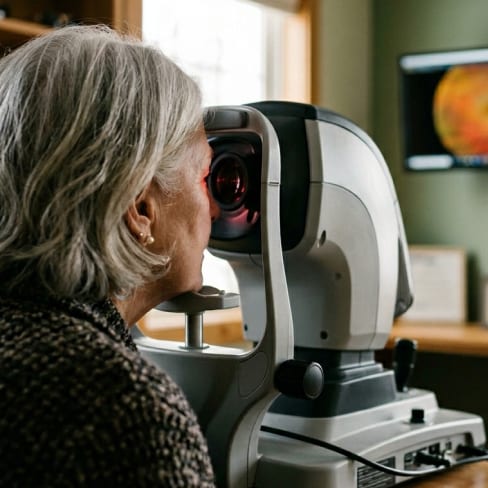
Our clinical approach focuses on early detection through our diagnostic technology, such as high-resolution Optos retinal imaging, which allows us to track subtle changes in the macula year after year.
For patients at high risk or in the early stages of dry AMD, we often recommend specific nutritional supplements and lifestyle modifications to help slow progression. These include specific formulations of vitamin C, vitamin E, lutein, zeaxanthin, zinc, and copper to support eye health and slow dry AMD.
If your condition requires advanced medical treatment, such as injections for wet AMD, we will refer you to a trusted specialist. Our team continues to collaborate closely with your specialist to manage your ongoing care plan and monitor your visual function.
Keep Track of Your Eye Health with Routine Exams
Consistent eye exams are the most effective way to detect AMD before it causes permanent damage to your central vision. Because the early stages of the disease are often symptomless, regular professional screenings are necessary even when your sight feels stable.
Our team at Prescott Valley Eye Care is dedicated to providing the preventive care needed to protect your vision as you age. Book your annual comprehensive eye exam today to stay proactive about your ocular health.
Visit Our Location
We’re located in the Bradshaw Medical Plaza just off North Windsong Drive. Free parking is available right outside the clinic.
- Phone: 928-771-9939
- Fax: 928-772-3972
- Email: pvecfd@pveyedoc.com
*We do not have an optician or optometrist available on Fridays. Patients can only pick up glasses and contact lenses.
Our Google Reviews

Our Featured Eyewear Brands











About Us
Specialty Eye Care
Eyewear & Contacts
Contact
- 928-771-9939
- 928-772-3972
- pvecfd@pveyedoc.com