
Protecting Your Sight from the Silent Thief
Glaucoma is often referred to as “the silent thief of sight” because it typically develops without early warning signs or painful symptoms. By the time a person notices a change in their vision, permanent damage has often already occurred.
This makes a comprehensive eye exam the only reliable method for detecting the condition before vision loss begins. According to the American Optometric Association, glaucoma is the second leading cause of blindness in the United States.
At Prescott Valley Eye Care, we provide thorough exams to monitor for signs of glaucoma and offer ongoing vision care and practical management advice for those who have received a diagnosis. Book your eye exam with us today.
Our Technology to Monitor Glaucoma
Because glaucoma can present differently in every patient, we use a variety of diagnostic tools to get a complete picture of your eye health. These technologies allow us to track subtle changes over time.
- iCare Tonometry: This device measures your internal eye pressure. Elevated or fluctuating pressure is a primary indicator of glaucoma.
- Optos Retinal Imaging: This technology captures a detailed picture of the back of the eye, including the retina and the optic nerve.
- OCT Scans: These scans provide high-resolution, cross-sectional images of the eye’s layers, including the retina and optic nerve.
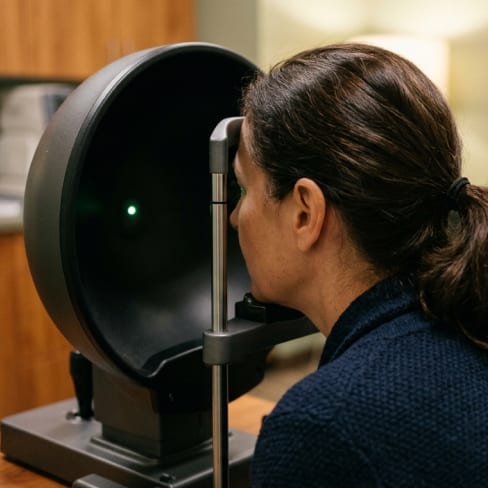
- Visual Field Analyzer: This test maps your peripheral vision and compares results over time, as glaucoma typically affects side vision first.
What Is Glaucoma?
Glaucoma is not a single disease, but a group of eye conditions that lead to damage of the optic nerve. The optic nerve acts like a high-speed cable, carrying visual information from your eye to your brain so you can process images. When this nerve is damaged, the connection begins to fail, resulting in permanent vision loss.
Because there are several ways the optic nerve can become compromised, glaucoma is categorized into different types based on how the damage occurs and the state of the eye’s drainage system. Each type has its own symptoms and treatment methods.
This is the most common form of the disease. It occurs when the eye’s drainage canals become clogged over time, causing internal pressure to rise slowly and steadily. Because the process is gradual and painless, many people do not realize their optic nerve is being damaged until they lose a significant portion of their peripheral vision.
Unlike the common form, this type is a medical emergency. It occurs when the drainage angle in the eye is suddenly blocked, causing a rapid and severe increase in eye pressure.
Symptoms usually include intense eye pain, nausea, redness, and blurred vision, requiring immediate professional intervention to save the patient’s sight.
In normal-tension glaucoma, the optic nerve experiences damage even though internal eye pressure remains within a statistically “normal” range. The cause of normal-tension glaucoma is unknown, but there are several possible reasons. Regular monitoring with OCT scans and visual field testing is particularly important for these cases.
This type refers to any form of glaucoma that develops as a result of another medical condition or physical factor. It can be triggered by eye injuries, certain medications (such as steroids), advanced diabetes, or even specific types of eye surgery. Managing the underlying cause is a critical part of treating secondary glaucoma.
Risk Factors for Glaucoma
While the exact cause of glaucoma is not yet fully understood, several factors can increase your likelihood of developing the condition.
Age is a significant factor, as is a family history of the disease. Other risks include living with diabetes, the long-term use of certain medications, and previous physical injuries to the eye. Lifestyle factors and systemic health also play a role in your overall vulnerability.
Because anyone can develop the “silent thief of sight,” we include routine screenings in every patient’s comprehensive eye exam to catch issues as early as possible.
How We Manage Glaucoma
We prioritize early detection of glaucoma by combining clinical experience with our diagnostic technology. If we detect signs of glaucoma or elevated eye pressure, we can prescribe eye drops or oral medications designed to help fluid drain more effectively or reduce the amount of fluid the eye produces.
Our optometrists are dedicated to finding a treatment plan that fits your lifestyle. If your condition requires surgical intervention or specialized medical care, we provide a referral to a trusted specialist and continue to collaborate with them to manage your ongoing care and monitor your visual stability.
Book Your Comprehensive Eye Exam in Prescott Valley
Proactive care is the most effective way to protect your vision from the irreversible effects of glaucoma. Regular visits to your optometrist allow for consistent monitoring of your eye pressure and optic nerve health, even when your vision feels clear.
Our Prescott Valley team is here to provide the professional guidance and diagnostic testing necessary to stay ahead of this condition. By prioritizing your annual exam, you take an active role in maintaining your sight for years to come.
Please contact our office to book your appointment and stay proactive about your visual health.
Visit Our Location
We’re located in the Bradshaw Medical Plaza just off North Windsong Drive. Free parking is available right outside the clinic.
- Phone: 928-771-9939
- Fax: 928-772-3972
- Email: pvecfd@pveyedoc.com
*We do not have an optician or optometrist available on Fridays. Patients can only pick up glasses and contact lenses.
Our Google Reviews

Our Featured Eyewear Brands












About Us
Specialty Eye Care
Eyewear & Contacts
Contact
- 928-771-9939
- 928-772-3972
- pvecfd@pveyedoc.com